Unboxing and Wiring Power
Set up your Clyr Controller by confirming the hardware in the box and choosing the best low-voltage power source before installation.
These steps walk you through unboxing the outdoor-rated controller and powering it on for the first time. Once the board boots with a steady yellow LED, you are ready to continue mounting and wiring the rest of your equipment.
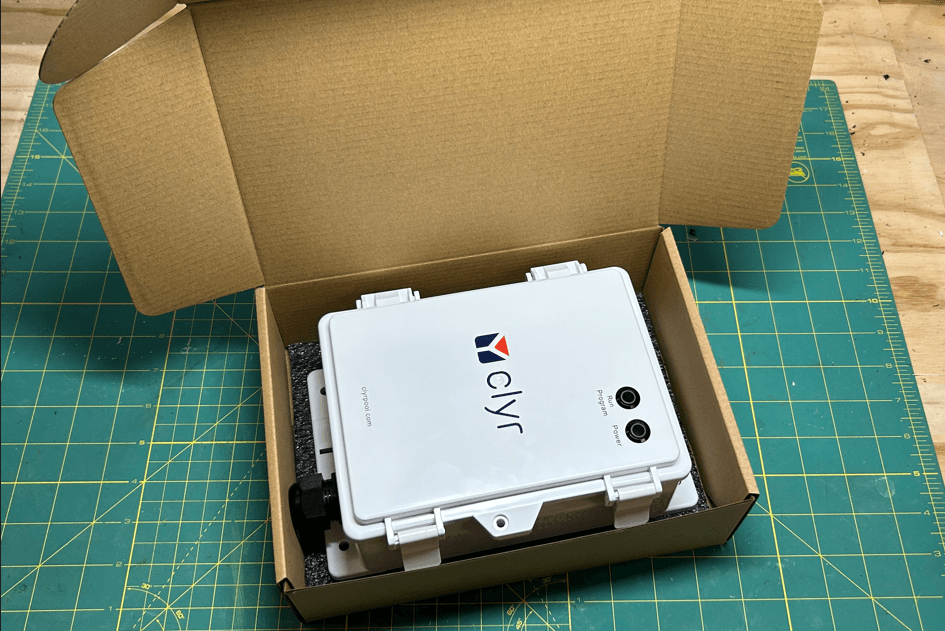
Step 1 – Unbox your Clyr Controller
Remove the controller from its packaging and open the hinged cover. The IP67-rated gasket keeps the enclosure sealed so you can mount it outdoors alongside the rest of your pool equipment.
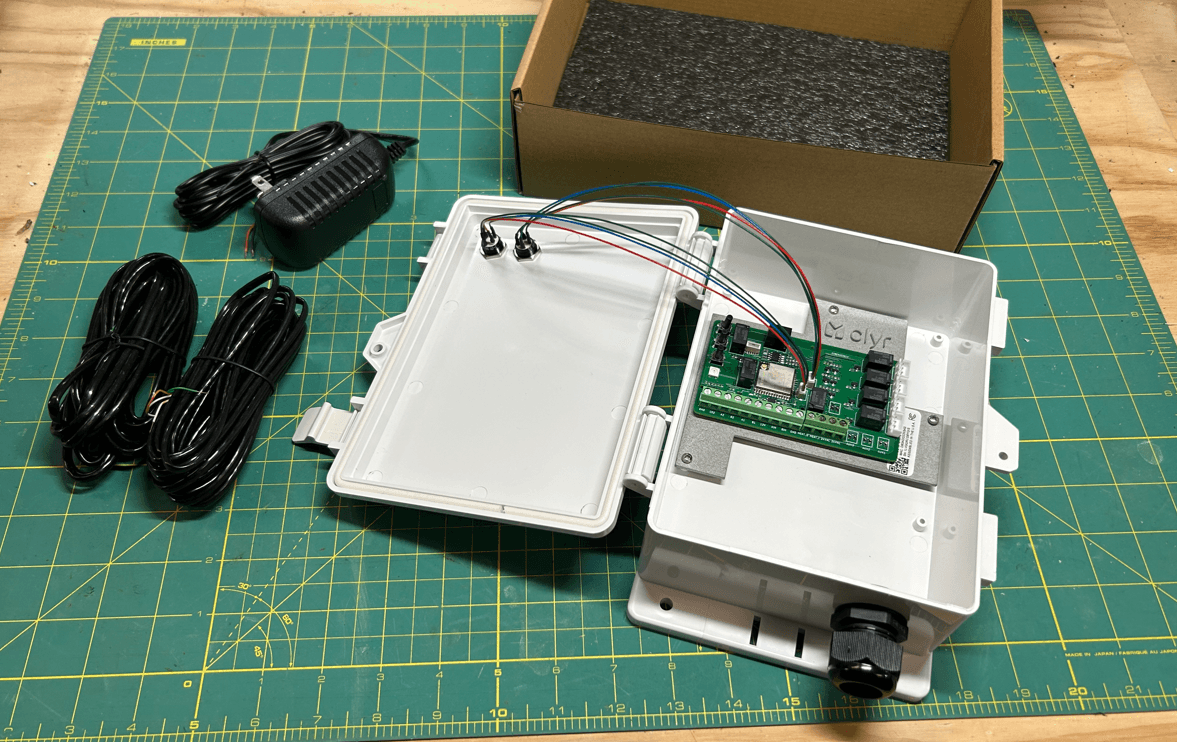
Inside the box you will find:
- Two control cables
- 20-24 volt power supply
- Clyr controller circuit board (PCB)
Step 2 – Connect your controller to power
Important: The controller supports multiple low-voltage power sources. Whenever possible, reuse low-voltage power already available at the equipment pad to simplify the install.
Remove the control cables and included power supply so you can decide which power option best fits the equipment on site. Lay the harnesses out beside the controller so every connector is easy to reach while you run low-voltage wiring.
Power option 1 – Use pump low-voltage power
Heads up: Pentair pumps, EasyTouch, and IntelliCenter systems do not provide enough power for the controller and accessories. Choose a different power source if any of these are present.
This option works best for Clyr Lite controllers or full controllers that are not driving auxiliary relays.
- Turn off the breaker that supplies power to your pump.
- Remove the screws on the back lid of the pump so you can reach the low-voltage terminals.
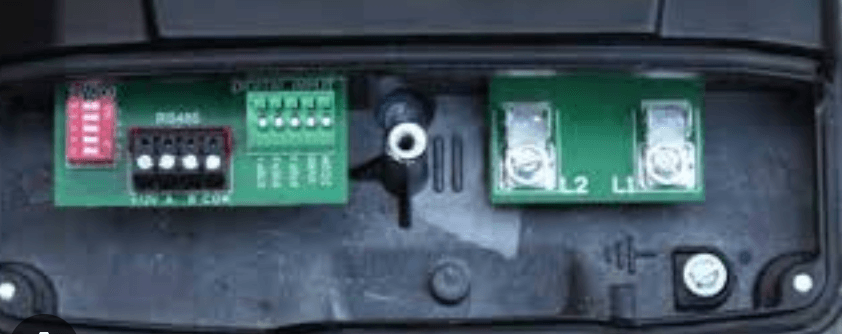
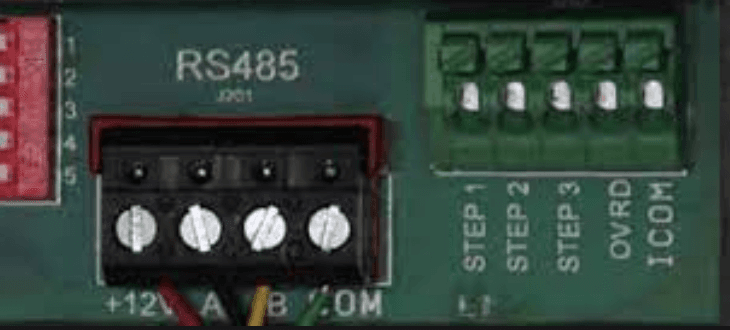
- Locate the four-port RS485 terminal block and identify the COM and 12V ports.
- Hayward: COM uses the green terminal and 12V uses the red terminal.
- Jandy RS485: the standard common is GREEN / terminal 4; BLACK / terminal 2 is a data terminal, not common. RED / terminal 1 is the power terminal. Verify the exact pump rating and available accessory current before using it to power Clyr. Do not infer Pentair wiring or accessory-power suitability from this Jandy pinout.
- Verify that the proposed connection is approved for the exact pump and Clyr hardware. Do not disconnect existing controls or join power outputs without the model-specific wiring plan.
- Run a four-wire cable (or Ethernet cable) from the pump to the controller and land your chosen conductors on COM and 12V. For example, use black for COM and red for 12V.
- Restore all wiring covers before restoring power at the breaker. The controller's status LED should illuminate solid yellow.
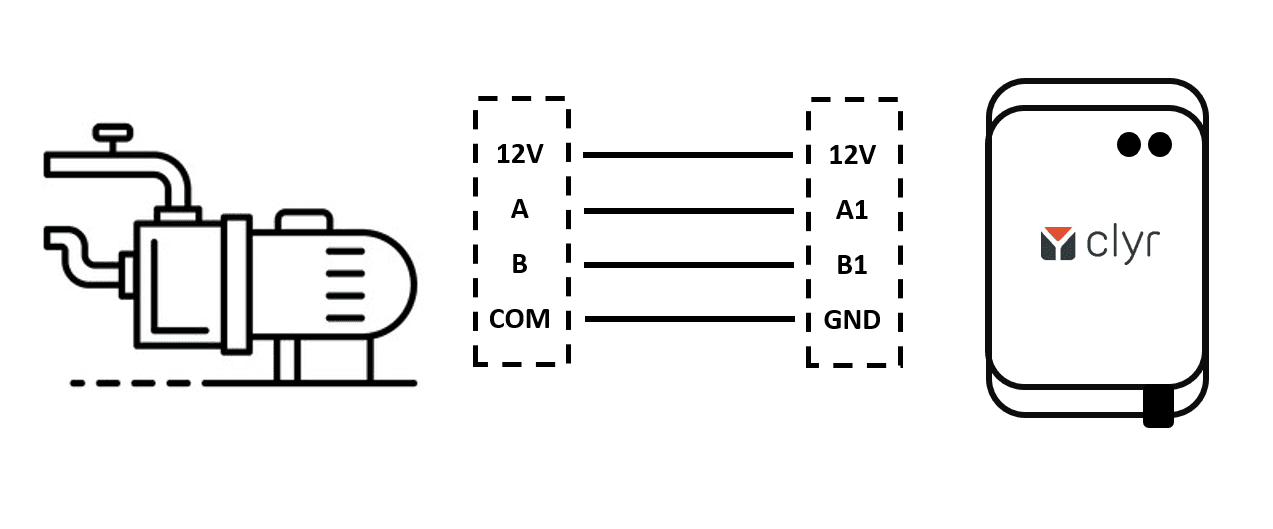
Yellow LED on? Your controller has power and is ready for the next installation steps.
Power option 2 – Use the Clyr power supply
Recommended: When your controller manages auxiliary relays, use the included Clyr power supply so the board always receives sufficient current.
- Plug the Clyr power supply into a 120VAC outlet near your equipment pad.
- Connect the low-voltage leads to the controller: black wire to GND and red wire to 12V.
- Confirm the controller's LED turns solid yellow, indicating it is receiving power.
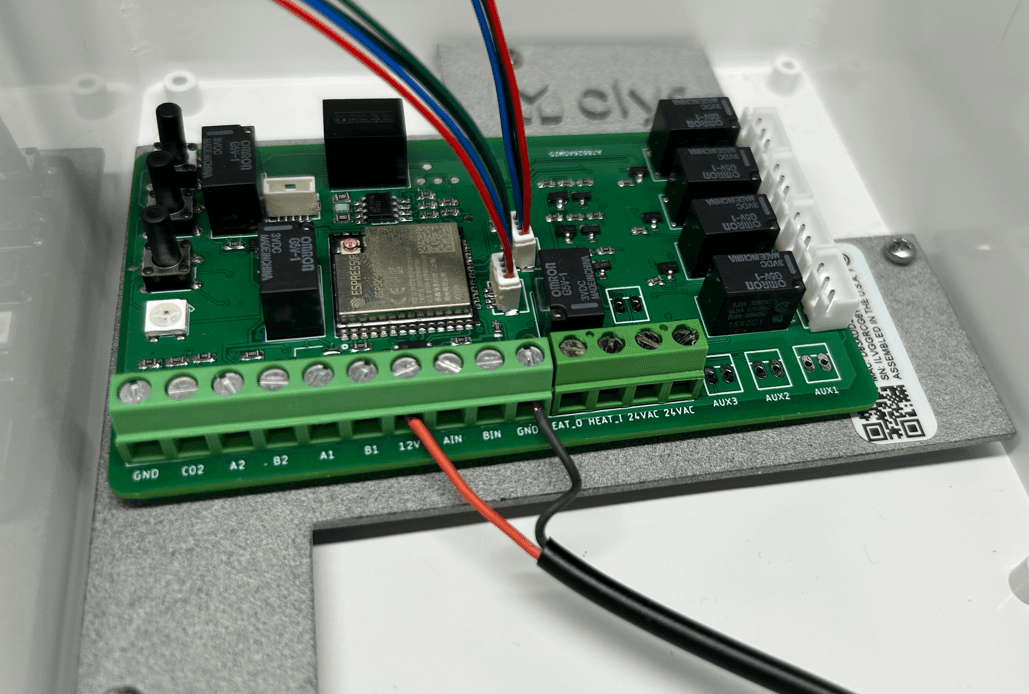
With power applied and the LED confirmed, proceed to mounting the enclosure and wiring sensors, relays, and network connections.